01
Restaurant POS & Order Management
Manage dine-in, takeaway, and other order types through
an integrated point-of-sale environment. Staff can create
orders, add menu items, modify selections, apply
discounts, and process different payment methods while
maintaining accurate transaction records. Orders can be
connected with tables, customers, staff members, and
invoices, allowing restaurant teams to follow each
transaction from the initial order until payment is
completed. This helps reduce order-entry errors and
provides a more organized sales process.
02
Table & Reservation Management
Organize the restaurant's seating capacity and customer
reservations through a centralized interface. Staff can
monitor table availability, assign guests to suitable
tables, record reservations, and follow the current
status of dining areas. The system helps coordinate
reservations with available seating and reduces the
possibility of conflicting bookings, enabling staff to
manage busy periods with greater efficiency.
03
Menu & Recipe Management
Create and maintain a structured digital menu covering
food items, beverages, categories, prices, descriptions,
options, and other product information. Menu items can
also be associated with recipes and required ingredients,
giving management greater visibility into the resources
needed to prepare each product. Changes to prices,
availability, or menu structure can be managed centrally,
helping staff work with consistent and up-to-date
information.
04
Kitchen & Order Tracking
Improve coordination between service staff and kitchen
teams by organizing incoming orders according to their
preparation stage. Orders can be directed to the relevant
kitchen area and monitored through stages such as new,
in preparation, ready, and completed. This provides
kitchen teams with clearer priorities while allowing
front-of-house staff to understand the progress of each
order and respond to customers more effectively.
05
Inventory & Purchasing Management
Maintain control over ingredients, beverages, packaging,
and other restaurant supplies by tracking purchases,
stock quantities, movements, and supplier information.
Recipe-based consumption can help connect menu items
with their required ingredients, providing greater
visibility into stock usage. Management can identify
items that require replenishment, monitor purchasing
activity, and reduce the operational impact of shortages
and unnecessary inventory accumulation.
06
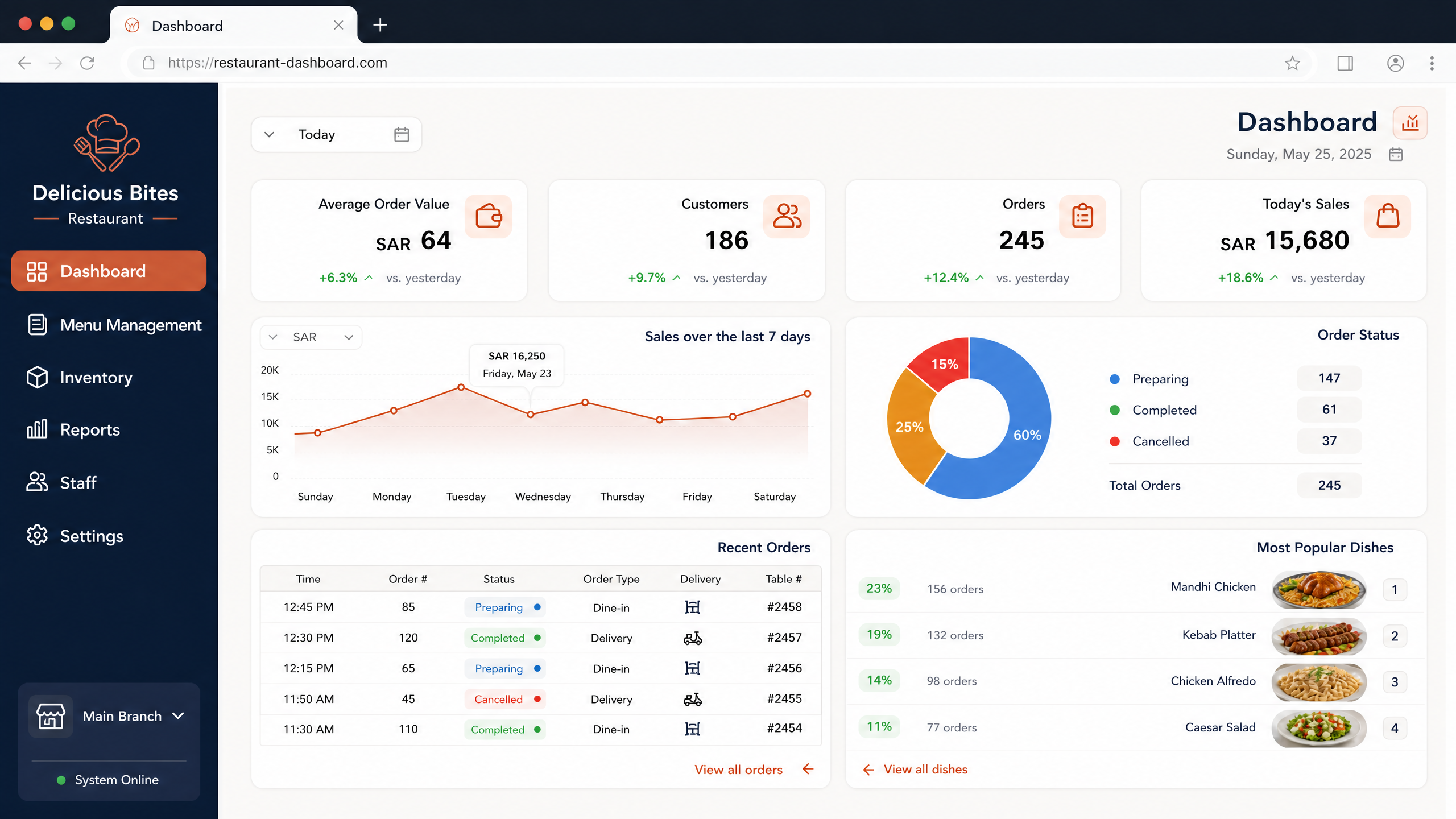
Reports & Management Dashboard
Gain a comprehensive view of restaurant performance
through organized dashboards and detailed reports.
Management can review sales, orders, revenue, payment
activity, popular menu items, purchasing, inventory
movements, and other important operational indicators.
By bringing business data together in an easy-to-review
format, the system helps management identify trends,
evaluate performance, control operational costs, and
make informed decisions based on reliable information.